
For thousands of years, money has evolved alongside human civilization — from seashells and shiny stones to coins, paper bills, and now, intangible pixels on a screen. But what we’re witnessing today isn’t just another step in that evolution — it’s a revolution. The rise of Money 2.0 marks a turning point where technology, trust, and value are being completely redefined.
From Shells to Screens — The Evolution of Value
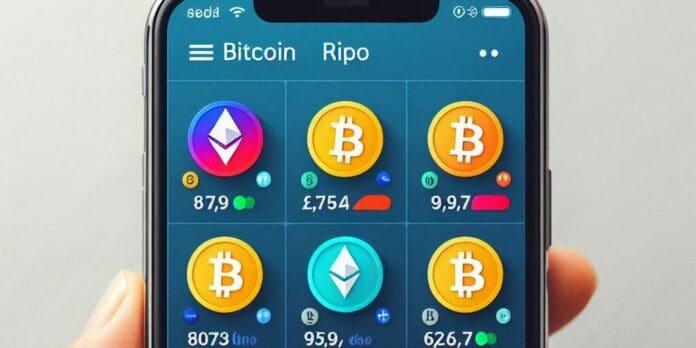
Long before central banks and credit cards, people traded using shells, beads, and metals. These items were valuable because they were rare and universally recognized. Later, paper money made trade easier, representing trust in a governing system. Fast forward to the 21st century — money became digital.
We use apps, cards, and mobile transfers daily without ever touching a physical coin. But now, the concept of money is detaching entirely from traditional systems, powered by blockchain, artificial intelligence, and decentralized finance (DeFi).
In this new era, money isn’t just something you spend — it’s something you code, trade, and automate. Welcome to Money 2.0.
The Rise of Digital and Decentralized Money
Cryptocurrencies like Bitcoin and Ethereum started as niche experiments but have become symbols of financial independence. Unlike traditional currencies controlled by governments or banks, these digital assets operate on decentralized networks, where transparency and security come from mathematics, not politics.
The blockchain — the technology behind crypto — allows transactions to be verified without intermediaries. Every transaction is recorded on a public ledger, impossible to alter, creating an ecosystem of trustless trust.
But the story doesn’t end there.
We now see the rise of CBDCs (Central Bank Digital Currencies) — government-backed digital money designed to bring the convenience of crypto into a regulated system. Countries like China (with its Digital Yuan) and the European Union (with the Digital Euro) are leading this transformation. The U.S. is experimenting too, with discussions around a potential digital dollar.
This convergence between decentralized innovation and government regulation could define the next era of finance — a world where every transaction is instant, borderless, and smart.


AI and the Future of Finance

Artificial intelligence is quietly becoming the backbone of Money 2.0.
AI algorithms already predict market trends, optimize investments, and even manage personal budgets better than humans. In high-frequency trading, AI bots execute thousands of transactions per second, reacting to shifts in milliseconds. But the real breakthrough lies in smart contracts — self-executing agreements that automatically trigger when conditions are met.
Imagine paying for your electric car only when it charges at a renewable energy station, or a freelancer getting paid instantly once the project is delivered — no delays, no banks, no middlemen.
That’s AI-powered finance, running on blockchain logic.
We’re moving toward a future where money is not just digital — it’s intelligent. It knows who owns it, where it should go, and under what conditions it can be spent.
The Metaverse Economy and Digital Identity

Money 2.0 extends beyond traditional finance — it’s entering the Metaverse.
In virtual worlds, people already buy land, clothes, art, and experiences using digital tokens. These aren’t just games; they’re evolving into functioning economies with real monetary value. Tech giants like Meta, Apple, and Microsoft are investing billions to merge virtual spaces with real-world commerce.
The Metaverse introduces digital identity as currency. Your avatar, reputation, and digital assets could become as valuable as your real-life possessions. This creates opportunities — but also raises questions about privacy, inequality, and control.
If your money, job, and identity all exist in a digital ecosystem, who truly owns them — you or the algorithm?
Challenges and Ethical Dilemmas

Of course, every revolution comes with chaos.
The shift toward Money 2.0 raises serious concerns:
- Security — Digital currencies are vulnerable to hacks and scams.
- Surveillance — Governments could track every transaction in a CBDC system.
- Inequality — Those without access to technology risk being left behind.
- Environmental cost — Mining cryptocurrencies consumes vast energy resources.
Balancing innovation with ethics will define how well this transition succeeds.
Money 2.0 promises freedom, but it also demands responsibility — from developers, governments, and everyday users alike.
The Road Ahead: Beyond Currency
Ultimately, Money 2.0 isn’t just about how we pay — it’s about how we define value.
When art, identity, and code can all be monetized, we start questioning what “wealth” even means. The line between the digital and physical economy is disappearing, and financial systems are merging with AI-driven ecosystems that adapt, learn, and evolve with us.
In this new era, money becomes more than a tool — it becomes a living network, constantly learning and reshaping itself around human behavior.
Conclusion: The Future of Money Is Already Here
The transition to Money 2.0 won’t happen overnight — but it has already begun. Every time you use Apple Pay, trade crypto, or step into a metaverse marketplace, you’re participating in the next chapter of economic history.
The first humans traded shells.
The next generation traded gold.
We? We’re trading code.
Money 2.0 is not just the future of finance — it’s the future of humanity’s trust system, built on algorithms instead of paper promises.
The question is no longer if money will change…
It’s how far it will go before it stops being money at all.
You Might Also Like;